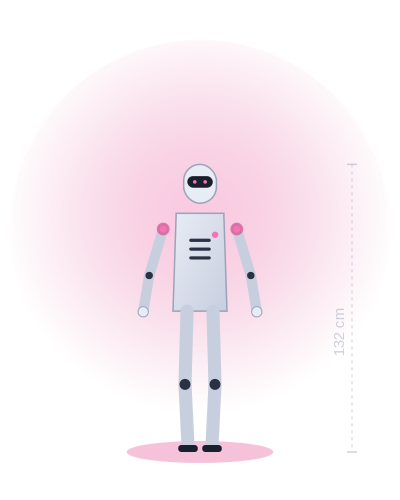
Unitree G1, two critical flaws: root on the robot via Bluetooth. What it means for anyone bringing a humanoid into the home
On August 27, 2026, researcher Olivier Laflamme published two attack chains (CVE-2026-76639 and CVE-2026-76640) that give root access on the locomotion computer of the Unitree G1 EDU, one of them just from within Bluetooth range. Unitree has acknowledged the problem and is rolling out patches.
⚠️ How to read this piece. It concerns security vulnerabilities in a product from an identified company. Every claim is attributed to its source and dated, and the status of the fixes needs to be rechecked over time.
Two critical flaws in the Unitree G1: root on the robot, one of them even via Bluetooth
On August 27, 2026, security researcher Olivier Laflamme published — under the name UniBLEed — two independent remote code execution chains that lead to root access on the "Locomotion PC" of the Unitree G1 EDU, the compact Chinese humanoid sold for development, research and education. The two flaws are tracked as CVE-2026-76639 and CVE-2026-76640. The research was picked up on 28-29 August by The Hacker News, SC Media, Security Affairs and other industry outlets.
The Locomotion PC is the Linux system that runs the robot's movement, cameras, speakers and voice functions: getting root means, in practice, controlling what the robot sees, says and physically does.
The two routes
CVE-2026-76640 — the Bluetooth chain. It starts from simple BLE (Bluetooth Low Energy) proximity: a nearby device can write to a GATT characteristic (identified as 0xFFE2) without any prior pairing and receive an encrypted bootstrap package from the robot. According to the research, that package can be used to get back to the robot's cryptographic material; the chain then continues through a weakness in the Wi-Fi provisioning phase (a buffer overflow) all the way to code execution as root.
CVE-2026-76639 — the adjacent-network chain. It goes through the chat_go and bashrunner services present in the same control environment and also ends with root privileges.
Laflamme states that he reproduced the problems on several G1 units (four, according to the account picked up by industry outlets).
The researchers point out that the Bluetooth chain is potentially "wormable": a compromised G1 could in theory spread the same exploit to other vulnerable G1s within Bluetooth range.
Again according to the research, a Unitree cloud API decrypted the bootstrap blob for any free, registered Unitree account, without checking that the account actually owned that robot. Laflamme says that Unitree fixed this ownership check in July 2026: as of the disclosure date, the cloud-assisted route therefore requires an account already linked to the target G1, or the cryptographic material already in hand.
The manufacturer's response
According to published reports, Unitree has confirmed the vulnerabilities and has released, or is rolling out, security patches.
To be verified. As of September 1, 2026, we have not found on a primary Unitree source — an official advisory, a firmware changelog, a fixed version number — which builds fix each CVE and since when they have been available.
Why it also matters to anyone looking at robots for the home
The G1 is not a home assistance robot: it is a platform for developers, research and education (see our Unitree G1 profile). Neither of the two CVEs directly concerns a consumer product for the home.
Our take. The case is nonetheless instructive for the topic this site follows closely: a humanoid is a computer with legs, microphones and cameras. The same weaknesses — unauthenticated Bluetooth pairing, fragile Wi-Fi provisioning, weak cloud-side ownership checks — are exactly the ones that, on a machine meant to stay in the living room, would turn into surveillance of the home and physical risk, not just data loss.
Our take. The G1's typical context of use — university labs, units left switched on, shared networks, many people handling them — amplifies the practical impact of an exploit that only requires physical proximity.
To be verified. To date, no public source documents real-world exploitation of these flaws in the wild.
If you own (or manage) a G1
Practical steps drawn from the recommendations published by the researchers and by security outlets — to be confirmed with the official Unitree advisory:
- update the firmware to the latest available version and check that the update has actually been installed;
- limit Bluetooth exposure and physical proximity to unattended units;
- isolate the robots on a VLAN/dedicated network, not on the office or home network;
- check which cloud accounts have been linked to the units over time;
- treat any unit not yet updated as potentially compromised.
What we are monitoring
- Official Unitree advisory and fixed firmware versions.
- Whether the problem extends to other Unitree models beyond the G1 EDU.
- Any reports of real-world exploitation.
- The reaction of European regulators: whether and how a home humanoid falls within the scope of the Cyber Resilience Act and the Machinery Regulation. We have not verified this on a regulatory source.
Sources
- Olivier Laflamme (boschko.ca), UniBLEed: Unauthenticated Root RCE on Any Unitree G1 Humanoid Robot Within Bluetooth Range, August 27, 2026 blog/forum
- The Hacker News, Two Unitree G1 EDU Humanoid Robot Flaws Enable Root RCE, One Starts Over Bluetooth, August 2026 press
- SC Media, Two root remote code execution flaws found in Unitree G1 EDU robot, August 2026 press
- Security Affairs, Hack One Robot, Reach the Next: Unitree G1 Security Flaws, August 2026 press
- Cyber Security News, August 2026 press
Next to each source we state what kind of source it is: “primary source” means the manufacturer, an official document or the author of the data; “press” a news report; “retailer” a distributor or a store, reliable about its own offer — price and availability in Italy — but not about the product’s features; “analysis” a professional firm or a research center that signs its own reading; “Chinese state media” an outlet controlled by the state, whose content should be weighed as such; “blog/forum” a non-editorial source; “unclassified” a source we have not assessed yet: the link stays, the judgment does not.