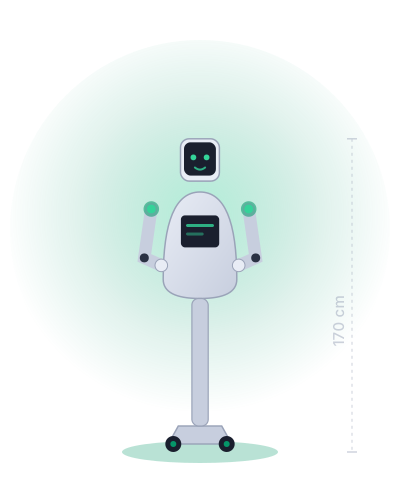
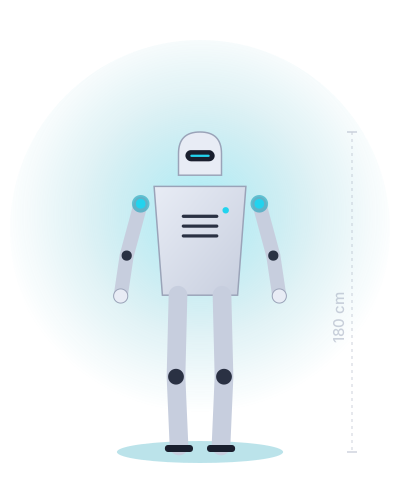
Four European robots clear a breakfast table at the EU Parliament, and coordinate with each other
On September 2, 2026 the European network euROBIN brought fifteen robots to the European Parliament. In the scenario closest to the home, four different robots cleared a breakfast table autonomously and taking each other into account, sorting things among the dishwasher, cupboard, fridge and trash.
⚠️ How to read this piece. It is the account of a public demonstration, verified on the press release of the German aerospace center that coordinates the network. A prepared demonstration shows what a robot can do under conditions chosen by those who organize it: that is not the same thing as any kitchen.
In brief
On September 2, 2026, at the European Parliament in Brussels, the euROBIN network presented fifteen AI-based robots, in front of about 170 representatives from politics, industry and research. (source: DLR press release, the German aerospace center that coordinates the network)
The scenario that concerns us closely is the one about everyday life: four different robots cleared a breakfast table, each one autonomously and — DLR writes — "showing 'consideration' for the other robots". They recognized objects randomly distributed on the table, picked up the plates with the same delicacy used for the cereal box, and sorted everything among the dishwasher, cupboard, fridge and trash. (source: DLR)
In another scene from the same day, DLR's humanoid Rollin' Justin waters a kitchen plant. (source: DLR)
Why it matters more than it seems
It is not the single gesture, it is the coordination. Clearing a table is not hard because plates are heavy: it is hard because objects are never where you expect them, and because four machines working on the same table have to avoid getting in each other's way. The European network states that the goal of that test was precisely this — getting different robots, built by different labs, to work together.
Our reading. It is the same direction as the open models coming out of China and the United States — the Unitree model for household tasks is the most recent example — but approached from the opposite end: not a single robot that learns many things, but many robots that learn to coexist. For a home, where one day a vacuum cleaner, a kitchen arm and a humanoid might live side by side, this is not an academic difference.
What this demonstration does not prove
That the capabilities shown are transferable from one robot to another outside the prepared scenario. Coordinating in a scene designed for that test and coping in any kitchen are two different problems, and the second one remains open.
Above all: none of these robots is a product you can buy. They are research platforms from European labs and universities, shown to an audience of policymakers.
Who is behind it
euROBIN is coordinated by DLR's Institute of Robotics and Mechatronics and brings together 31 organizations from 14 countries in 26 European cities, plus another 38 funded through cascade funding. (source: DLR)
Sources
- DLR — German Aerospace Center (research institution) primary source
- European Commission — Digital Strategy (official statement) primary source
- eWeek press
Next to each source we state what kind of source it is: “primary source” means the manufacturer, an official document or the author of the data; “press” a news report; “retailer” a distributor or a store, reliable about its own offer — price and availability in Italy — but not about the product’s features; “analysis” a professional firm or a research center that signs its own reading; “Chinese state media” an outlet controlled by the state, whose content should be weighed as such; “blog/forum” a non-editorial source; “unclassified” a source we have not assessed yet: the link stays, the judgment does not.